

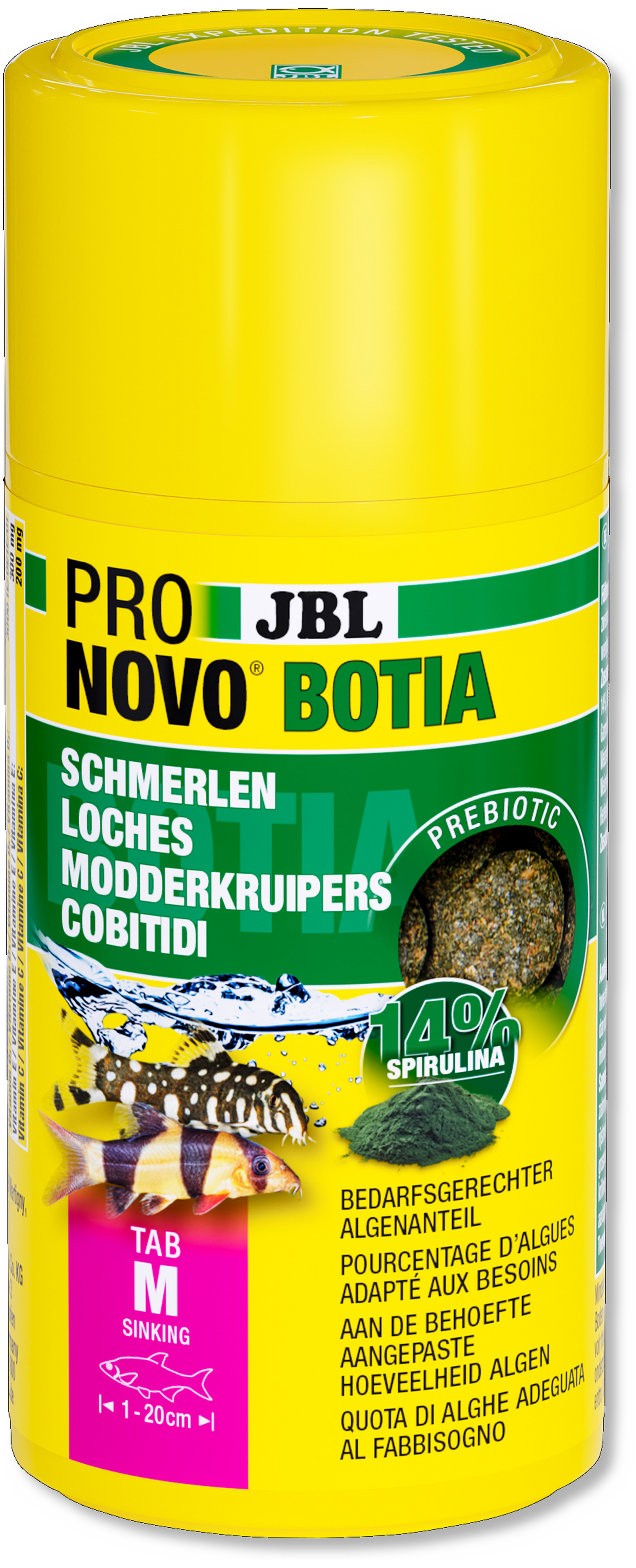


- Ideal staple food for all Cobitids (Botia, Gyrino, Gastromyzon, Pangio)
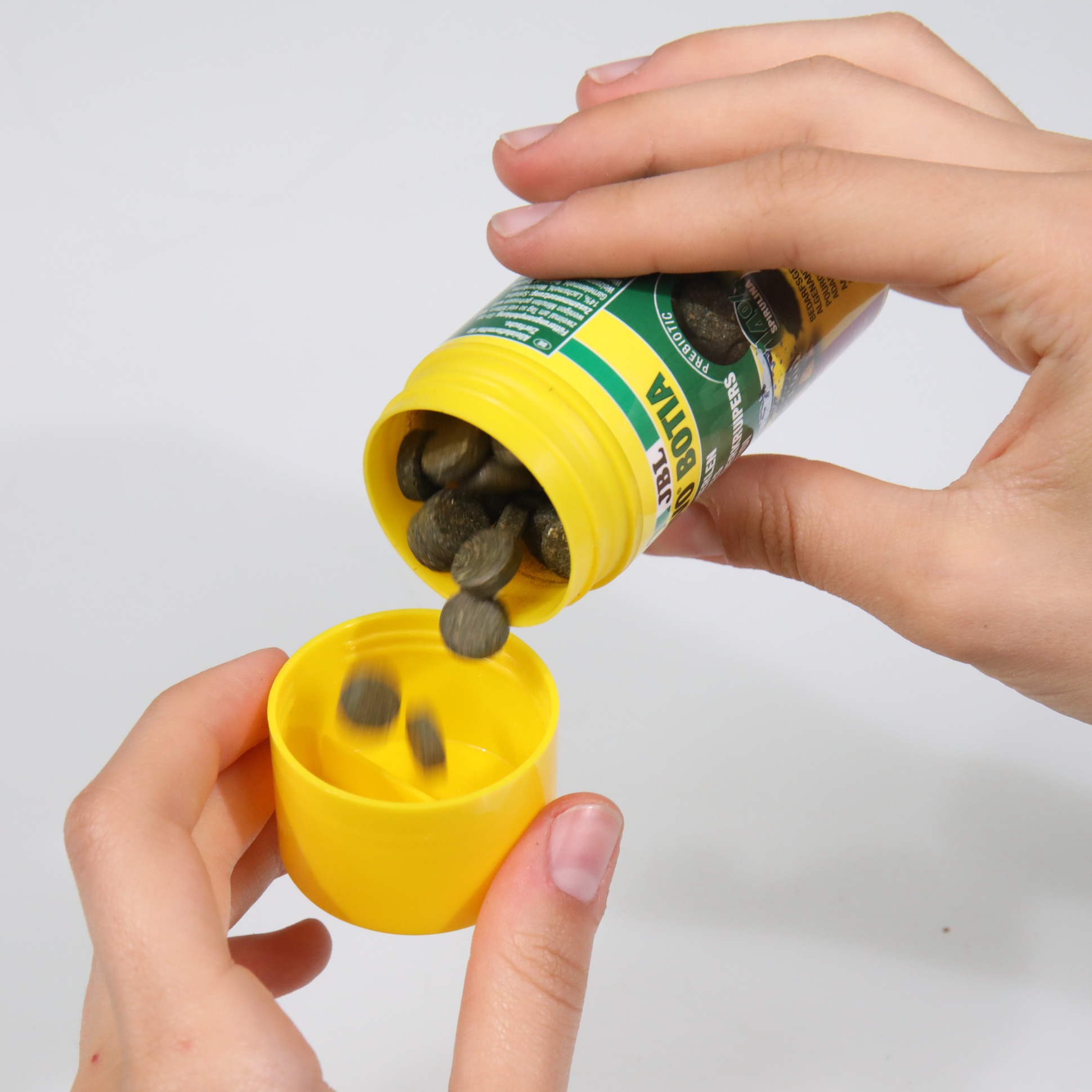
- Instructions: Allow to sink to the bottom of the aquarium or attach to the inside of the glass with light pressure
- Raw, natural ingredients, without synthetic additives, for a diet close to the natural diet and good health for aquarium fish. Tested during JBL research expeditions in tropical regions.
- High palatability, even for picky species, thanks to premium ingredients such as salmon, spirulina and shrimp
- Contents: original sealed box, recyclable, airtight and lightproof, with dispenser inside the lid (for 100, 250, 1000 ml).
All Cobitids originate from Asia and have a benthic lifestyle. They therefore feed primarily on the ground. Many species, for example the clown loach, Horas's loach, and the green loach, are voracious snail eaters!
How do bottom-dwelling fish in a community aquarium get their food?
You've probably seen this happen: someone throws a food tablet into the tank for their bottom-dwelling loaches, but the fish in the other water layers grab it, leaving the loaches with nothing! Another variation: you want the loaches to have some of the food from the other fish. But usually, the portion given is so large that it feeds both the loaches and the algae! For example, the loaches don't eat the food because it ends up among the decorations. It can then rot and lead to algae problems.
To make it work better: feed the fish in the upper water layers first, and while they're in the middle of a feeding frenzy, throw in one or two food tablets for the loaches.
What if you have different bottom-dwelling fish in an aquarium? You can easily feed two types of tablets at the same time (e.g., JBL PRONOVO CORYDORAS for armored catfish and JBL PRONOVO BOTIA for loaches). This will even be beneficial for the fish, as they will have a more varied diet, and each group of fish will still receive the food appropriate for its species. What is the difference between tablets and wafers? Food tablets (e.g., JBL PRONOVO TAB, JBL PRONOVO BOTIA) are mechanically compressed, fine flakes. Wafers, on the other hand, are made from a slurry pressed into a "sausage" mold, then sliced into thin pieces and dried as they come out of the extruder.
Notice
There is no opinion yet.