
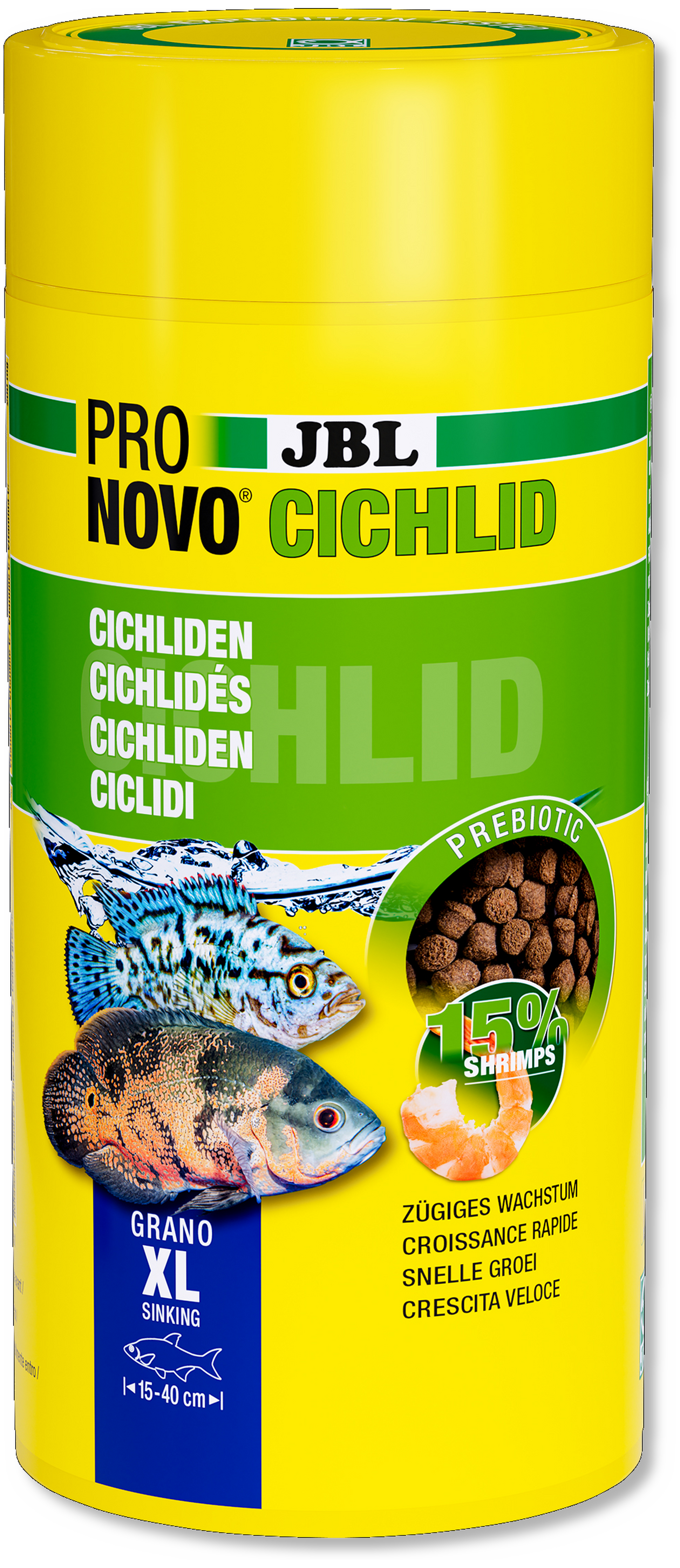
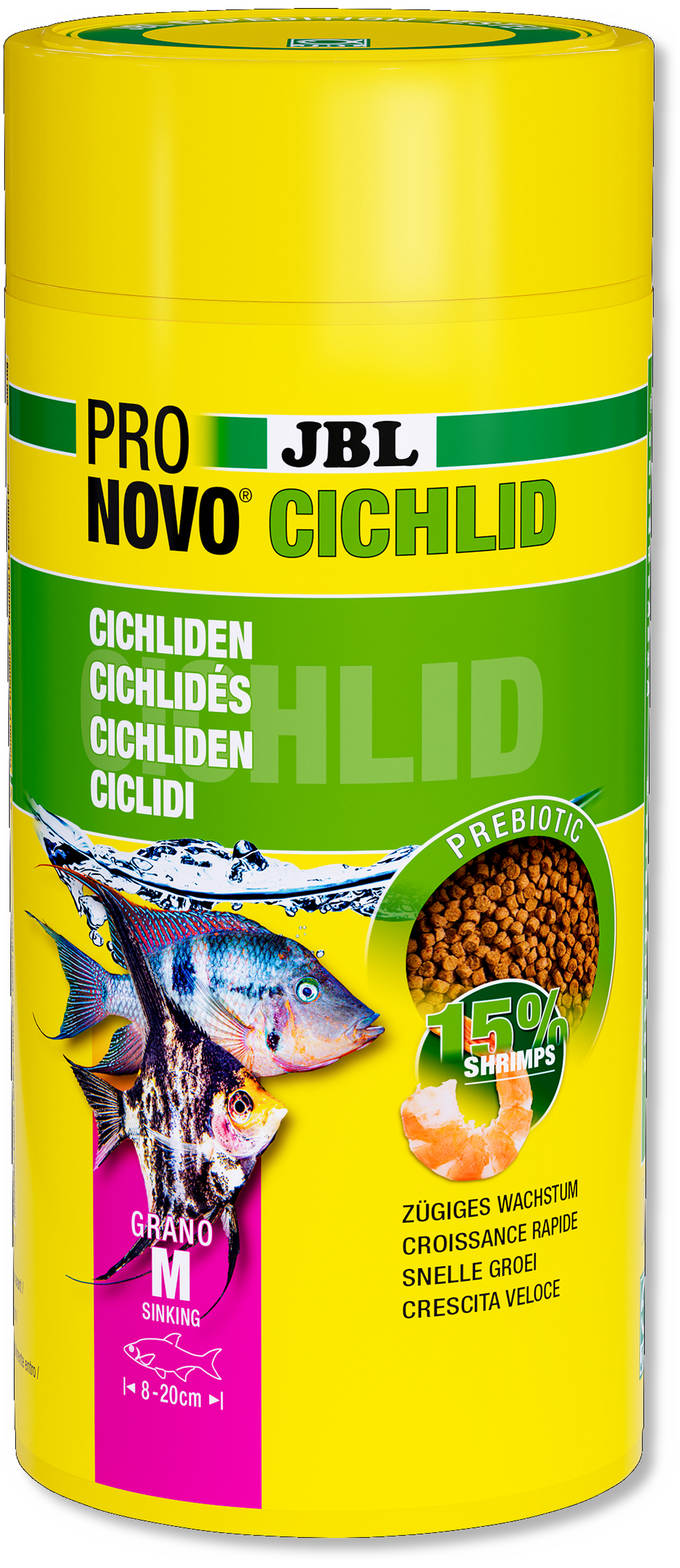
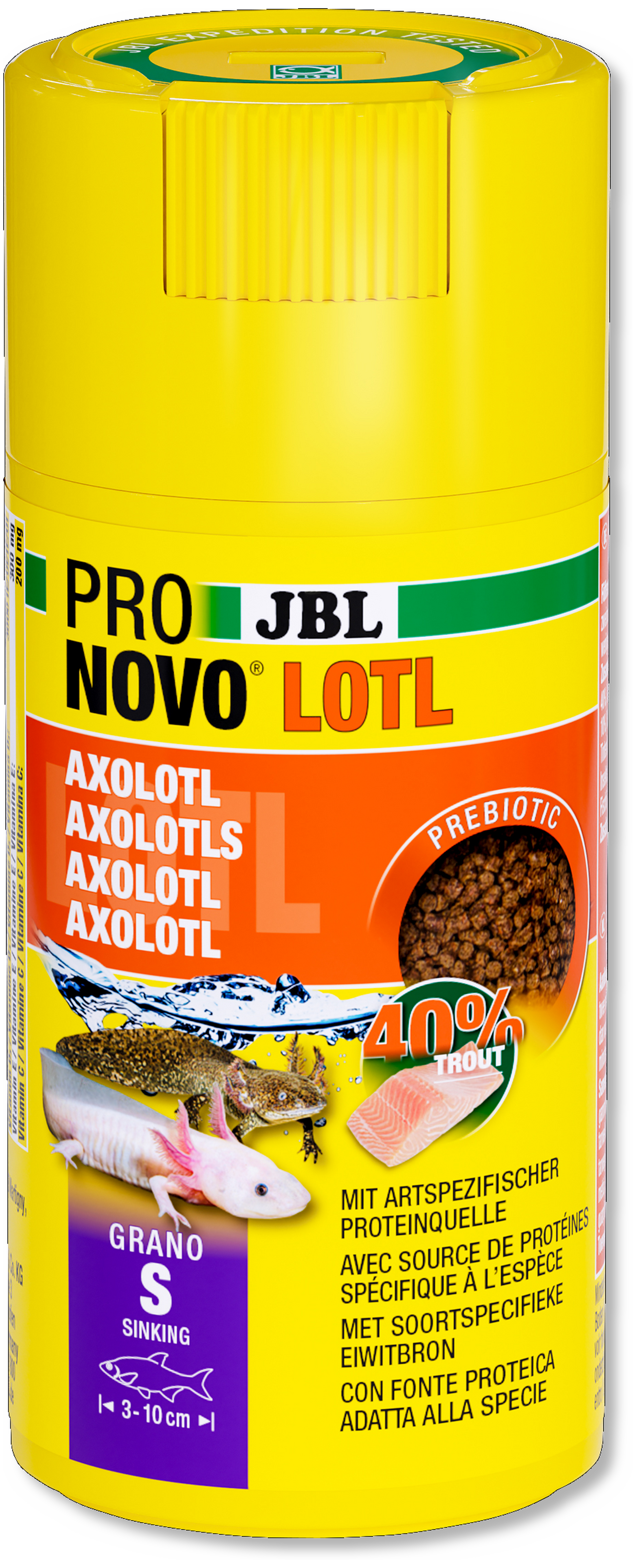

- Sinking prebiotic food for aquarium fish: the special dietary fibers contained in the food nourish the positive intestinal bacteria for healthy digestion.
- Raw, natural ingredients, with no synthetic additives, for a natural diet and healthy cichlids. Tested during JBL research expeditions in tropical regions.
- Highly palatable, even for picky cichlids, thanks to the quality ingredients – salmon and shrimp
- Contains premium natural astaxanthin extracted from krill and spirulina, which guarantees perfect colouring of Cichlids, e.g. Oscar.
- Contents: Original sealed box, airtight and lightproof, recyclable, with dispenser in the lid
Cichlids form an incredibly diverse group of fish, with over 1700 species. Their size can range from a few centimeters (Dwarf Checkered Cichlid) to 80 cm in Crenicichla. All cichlids take care of their young. Their diets include microorganisms, plants, and even other fish. It is therefore important to be well-informed about the species kept in your aquarium!
The JBL PRONOVO CICHLID S has been specially designed for smaller species, up to 10/12 cm. Among the most common genera in aquariums are: Microgeophagus, Apistogramma, Pelvicachromis, Pelmatochromis, Nannacara, Nanochromis, Crenicara, Laetacara, Dicrossus, and Ivanacara. Geophagus and Satanoperca, which are sea-feeding cichlids, grow larger but prefer small foods, which they forage for in the sand (hence the name "sea-feeding cichlids").
JBL PRONOVO CICHLID M is suitable for all medium-sized cichlids from 8 to 20 cm. Among them are many species from the genera Cichlasoma, Acarichthys, Aequidens, Thorichthys, Amalatitlania, Cryptoheros, Heros, Andinocara, Pterophyllum, Uaru and others.
JBL PRONOVO CICHLID XL is ideal for large specimens, between 15 and 25 cm. Among them, many species of the genera Crenicichla, Cichla, Amphilophus, Astronotus, Mayaheros, Cichlasoma, Rocio and some others.
Advantages of JBL Pure Fish Protein Varieties
: No cheap fishmeal.
Optimal protein-to-fat ratio.
Predominantly aquatic animal proteins.
Prebiotics: scientists agree that they promote digestion and therefore health. In our fish, another important aspect comes into play: thanks to improved digestion, their waste is reduced, resulting in less water pollution and thus fewer algae problems. The water stays cleaner.

Notice
There are no reviews yet.