

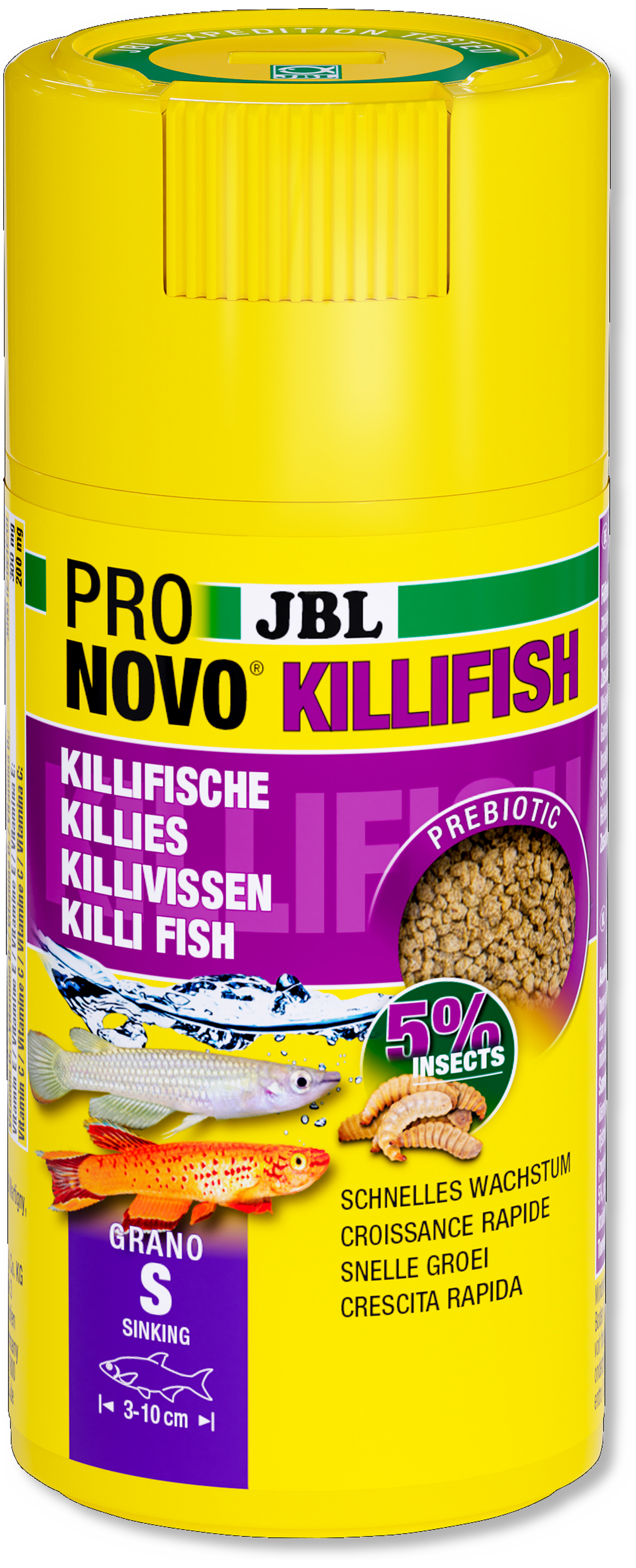
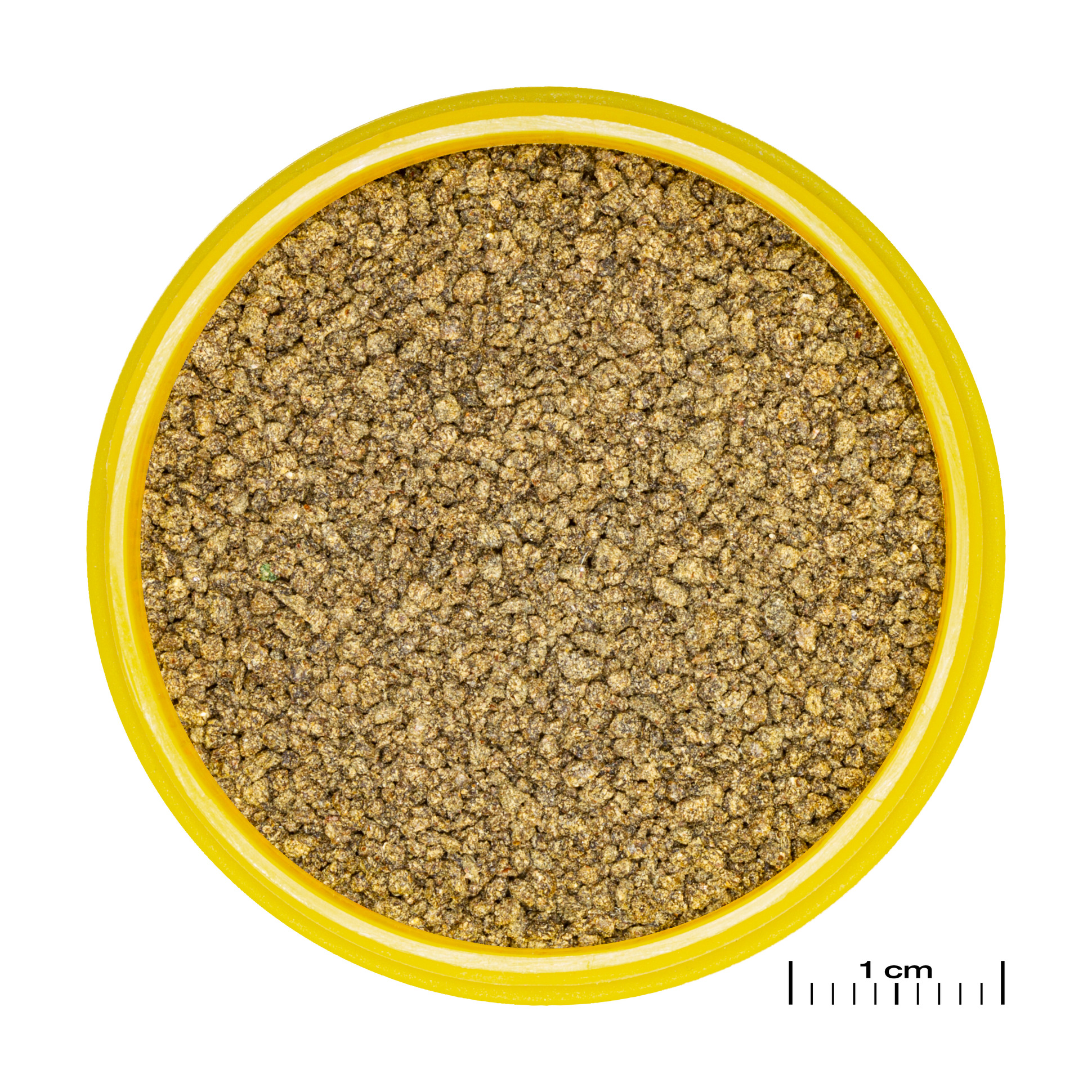

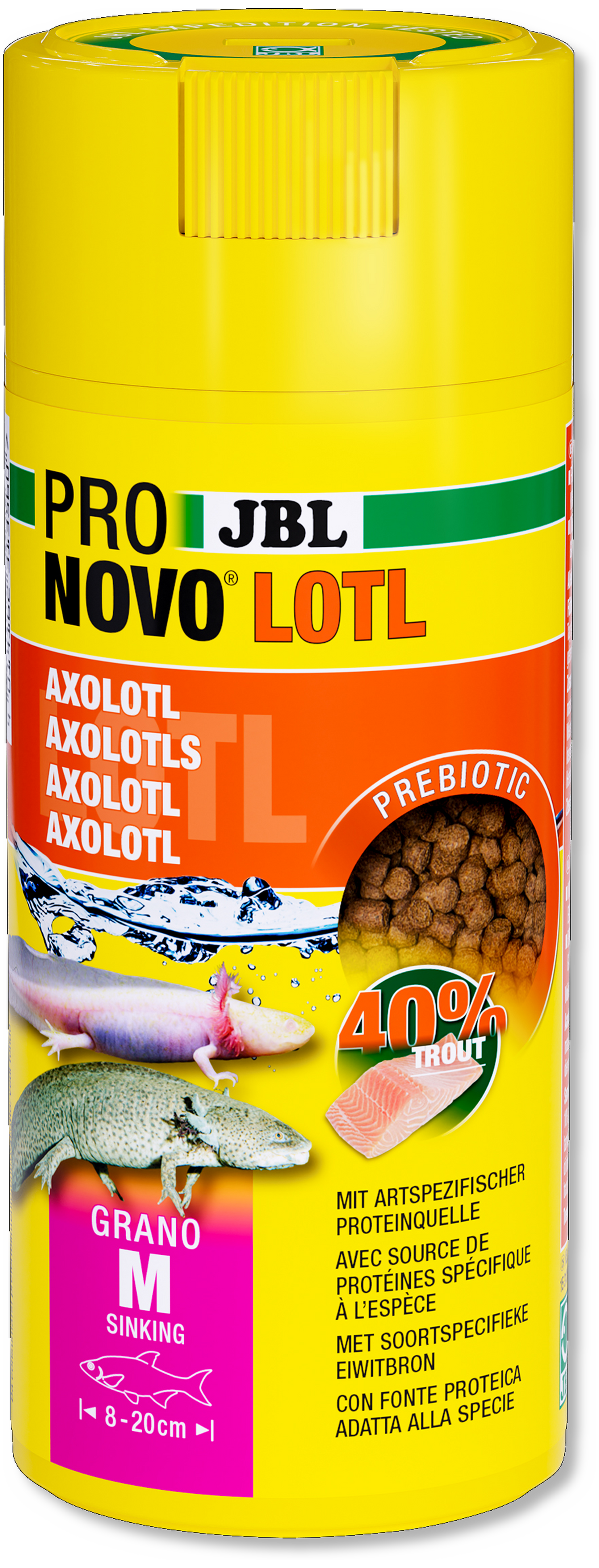
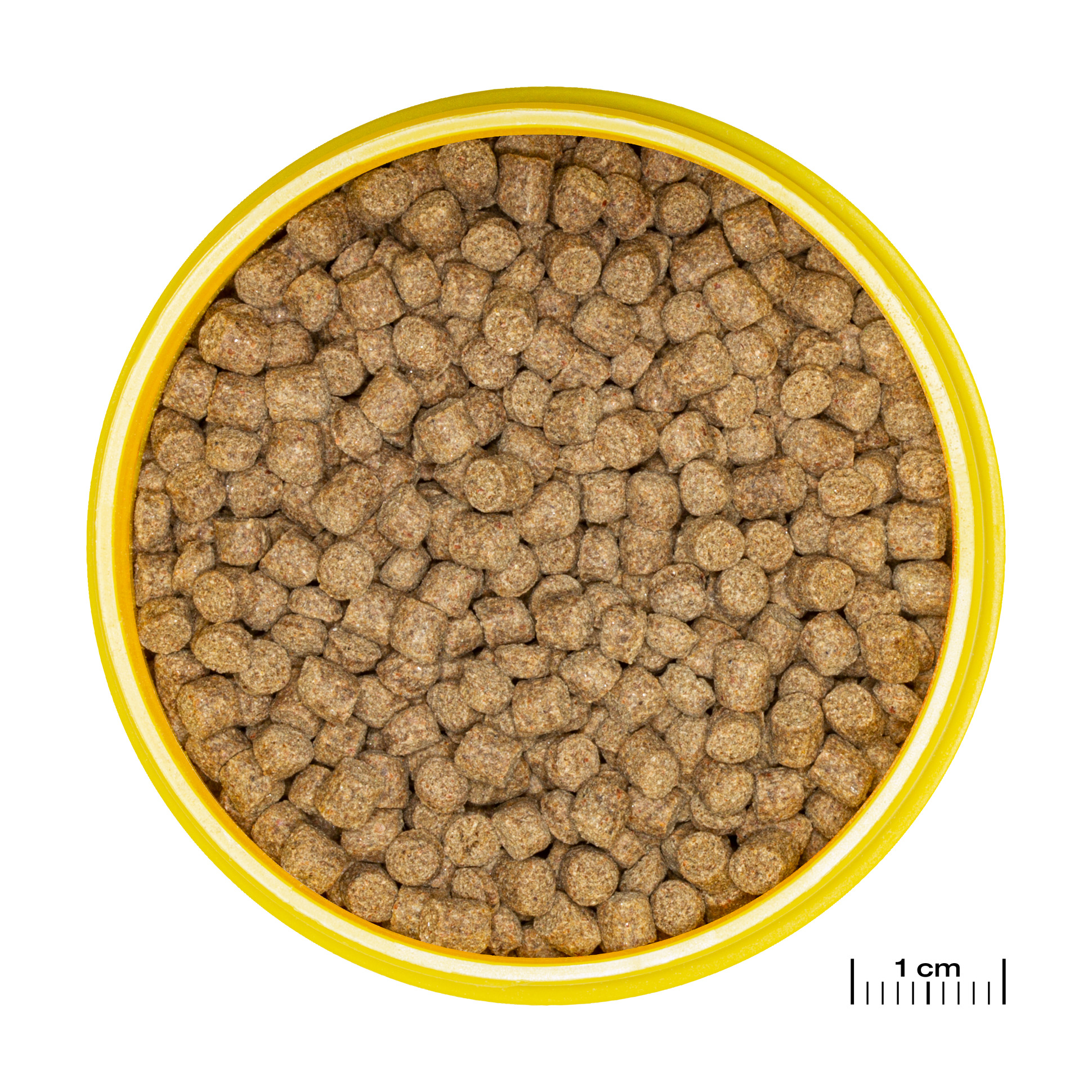
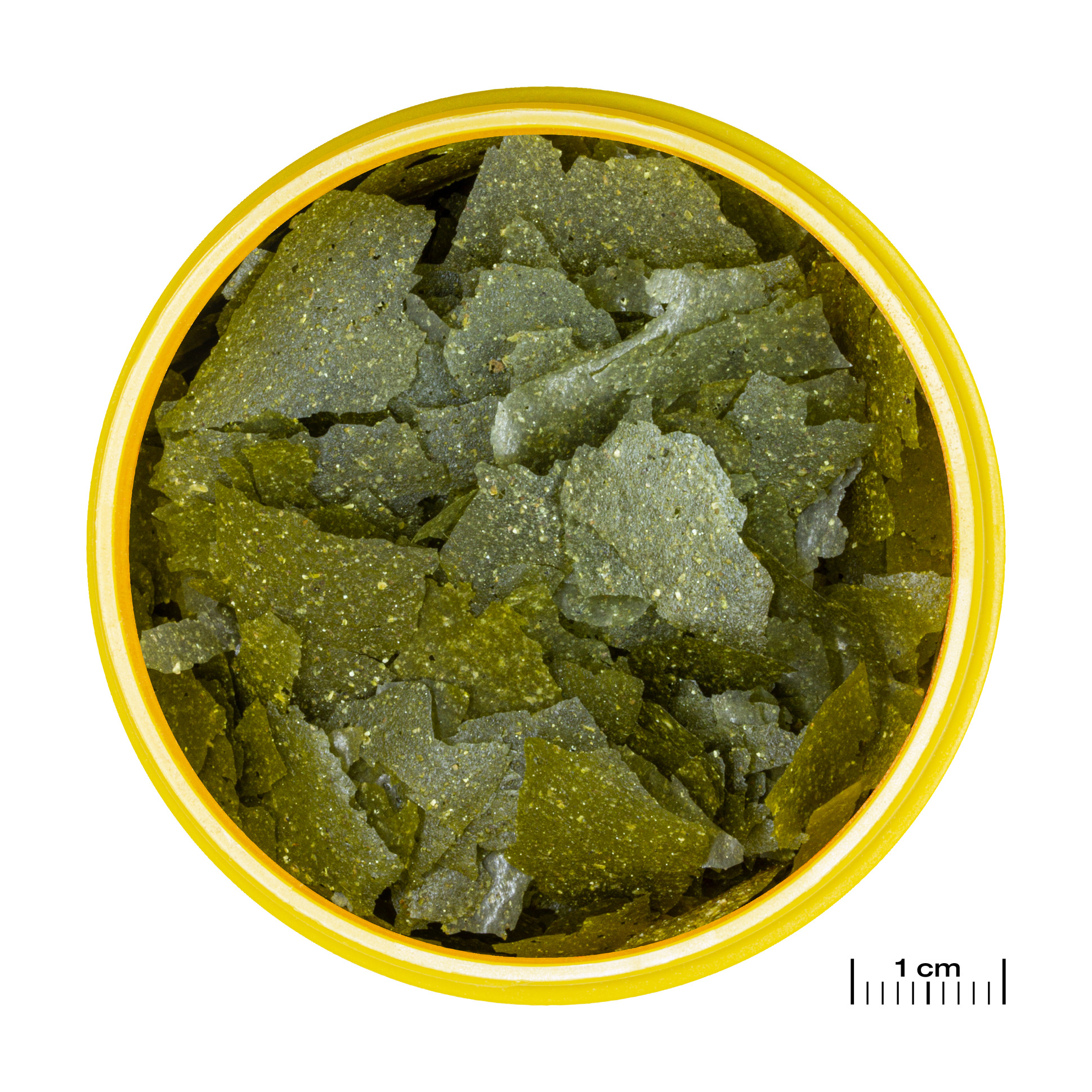
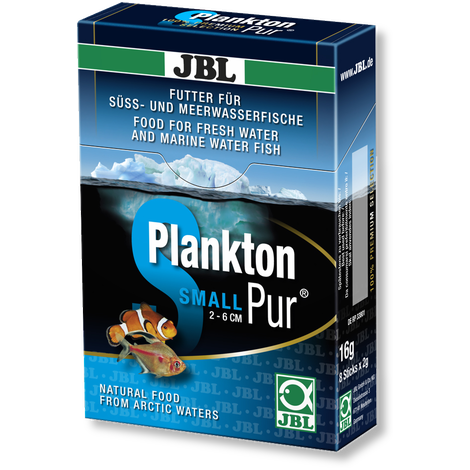
- Sinking prebiotic food for aquarium fish: the special dietary fibers contained in the food nourish the positive intestinal bacteria for healthy digestion.
- Raw, natural ingredients, without synthetic additives, for a diet close to the natural diet and good health for aquarium fish. Tested during JBL research expeditions in tropical regions.
- Highly appealing to all ovoviviparous Poeciliidae (killies), thanks to high-quality ingredients such as salmon, shrimp and insects.
- Contains very high quality natural astaxanthin, extracted from krill and spirulina, which ensures perfect coloration of all killifish species.
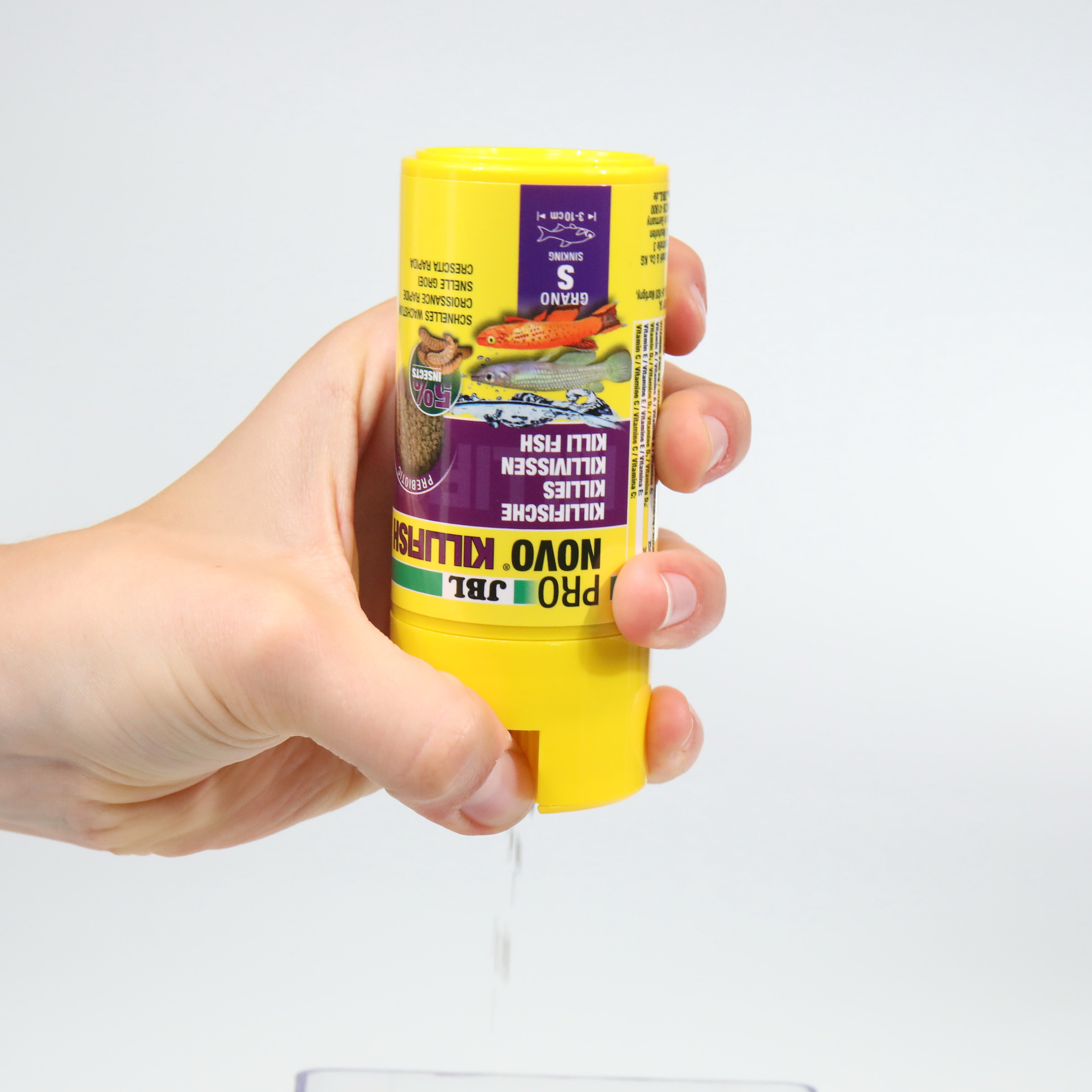
- Contents: sealed box, airtight and lightproof, recyclable, with a click-together dispenser for easy feeding
Killies (ovoviviparous Poeciliidae)
Many killifish are among the most colorful freshwater fish and even surpass most saltwater fish in their vibrant colors! They aren't very large and can be kept in fairly small aquariums. In the wild, many are adapted to the cycle of rainy and dry periods. When the rains begin, the eggs hatch quickly, the fry grow rapidly, lay their own eggs, and die when the dry season arrives and most bodies of water dry up. This is why they are also called "annual fish." In an aquarium, we don't have dry periods, except when the tank is emptying ;-), and the fish can live a little longer. Most species, but not all, prefer soft, acidic water. Adding peat to the filter (JBL Tormec) and JBL Tropol helps create water suitable for killifish. In their natural habitats, the waters are generally shallow and temporary. Small insects that fall to the surface of the water and insect larvae in the water are their only food. The JBL PRONOVO KILLI was developed specifically for this diet. Among killifish, epiplatys are generally a bit more robust, but they also eat just about anything that fits in their mouths. They tend to live in the upper water layers, while other Poeciliids inhabit the middle and lower water layers.
The benefits of prebiotic food: Prebiotics are "substrates selectively used by host microorganisms that produce a health benefit." Scientists agree that they promote digestion and therefore overall health. For our fish, another important aspect is better digestion: less waste, resulting in cleaner water and fewer algae problems. The water stays cleaner.



Notice
There are no reviews yet.