


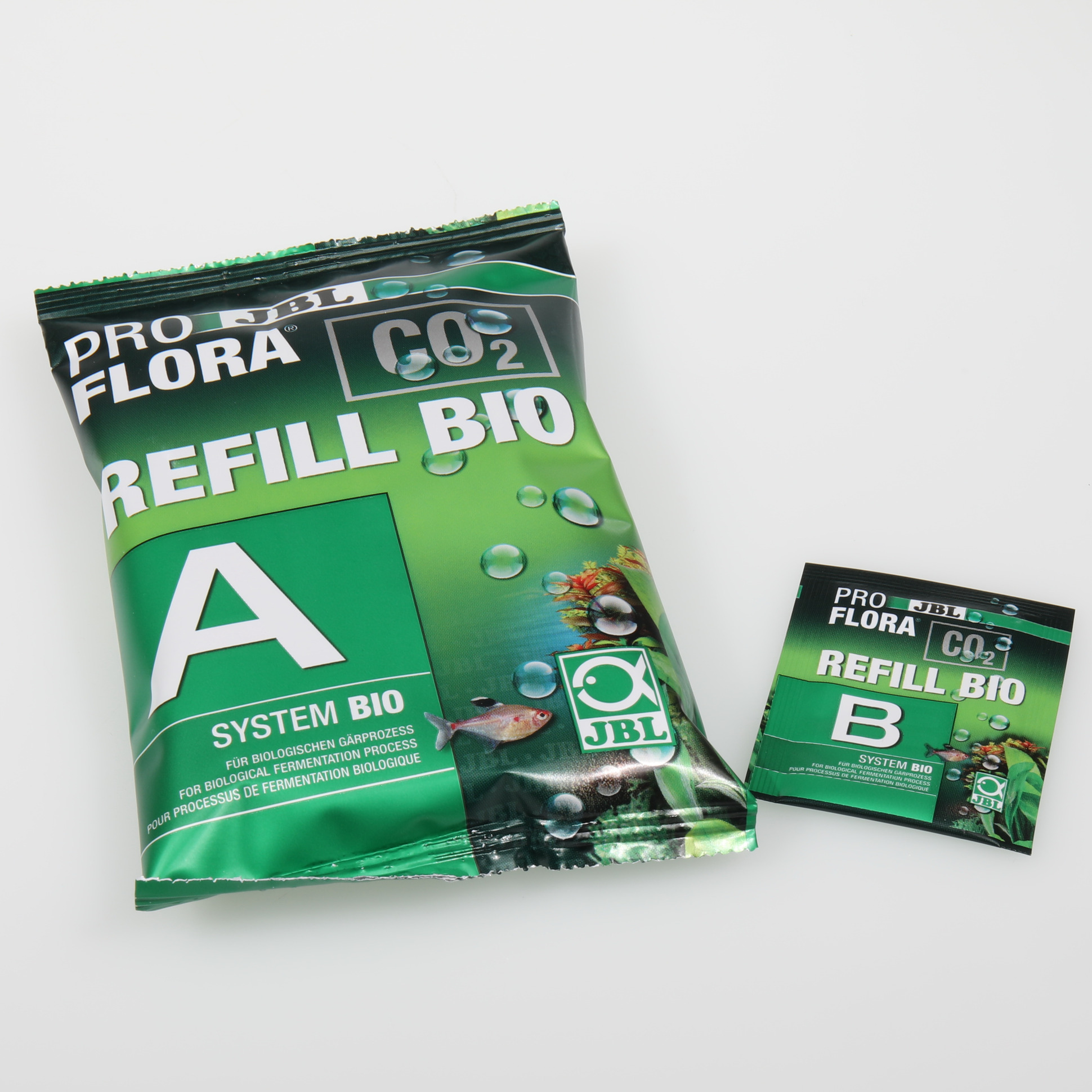
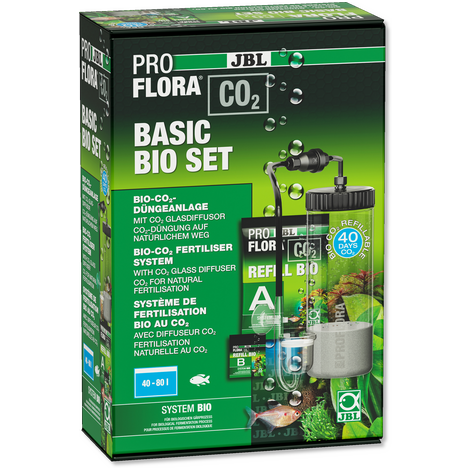

- Refill kit for CO2 bio-fertilization systems: 1 kit supplies a 30-80 L aquarium for 40 days with carbon dioxide, the basic nutrient for plants (mixed with water in the reaction tank).
- Simple to use: pour components A and B into the reaction vessel, fill with water, mix the components.
- Natural biological process: CO2 production by fermentation, with stabilizer for constant CO2 production.
- Includes both components A and B
- Contents: Refill kit for bio CO2 systems, including one sachet of component A and one of component B.
Aquarium Plant Nutrition:
Plants provide the aquarium with oxygen, which is vital for its inhabitants. They prevent algae growth and eliminate harmful substances. The JBL fertilization system delivers CO2, their primary nutrient, to the plants via the water. The plants absorb it and, with the help of light, convert it into sugars and oxygen through photosynthesis.
Difference between biological CO2 systems and those with CO2 cylinders: Biological CO2 kits are based on a biological yeast fermentation process that produces CO2. Two biological components react in a flask or reaction tank. To replenish the system after approximately 40 days, simply refill the flask or reaction tank with water and the two components. In CO2 kits with gas cylinders, the CO2 gas in the steel cylinders is pressurized to approximately 60 bar. When empty, specialist retailers can refill them (refillable cylinders, System M) or, if they are single-use cylinders (System U), they must be replaced.
Plants are completely indifferent to the source of their CO2, whether it comes from a biological system or a gas cylinder. They grow significantly better once a CO2 system is installed. These systems are quite important for aquarists. Do they want disposable cylinders, refillable pressurized cylinders, or a non-pressurized biological system?
Beware of "homemade" builds!
While sugar and yeast may produce the expected CO2 during the fermentation process, the process is short-lived and then very aggressive! JBL components contain stabilizers that allow the reaction process to run continuously and ensure CO2 production for 40 days.


Notice
There are no reviews yet.