

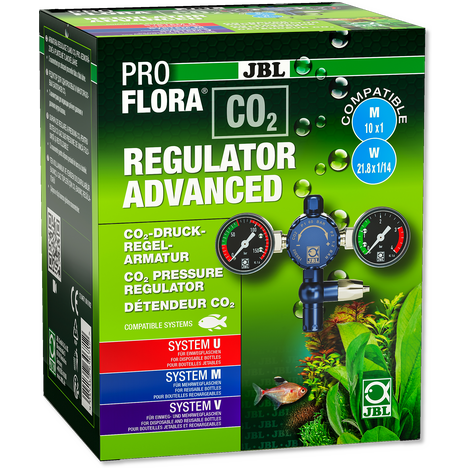
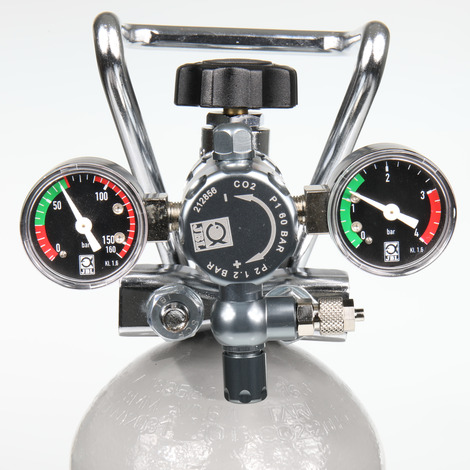

The regulator reduces the cylinder pressure from approximately 60 bar (shown on gauge 1) to a low working pressure of 1.5 bar (shown on gauge 2) to precisely regulate the CO2 supply.
Screw the regulator onto the CO2 cylinder and regulate the CO2 supply using the needle valve.
The regulator is compatible with both single-use CO2 cylinders (System U) and refillable cylinders (System M). By loosening the knurled nut (W21.8×1/14) with an Allen key, the regulator attaches to the M10x1 thread on disposable cylinders.
High-quality construction: anodized aluminum, precision CNC-milled, titanium color. Reliable sealing washer instead of an O-ring.
Contents: 1 CO2 regulator with 2 pressure gauges (for working pressure and cylinder pressure) for refillable cylinders, with a screw-on adapter to fit disposable cylinders.
Easy installation:
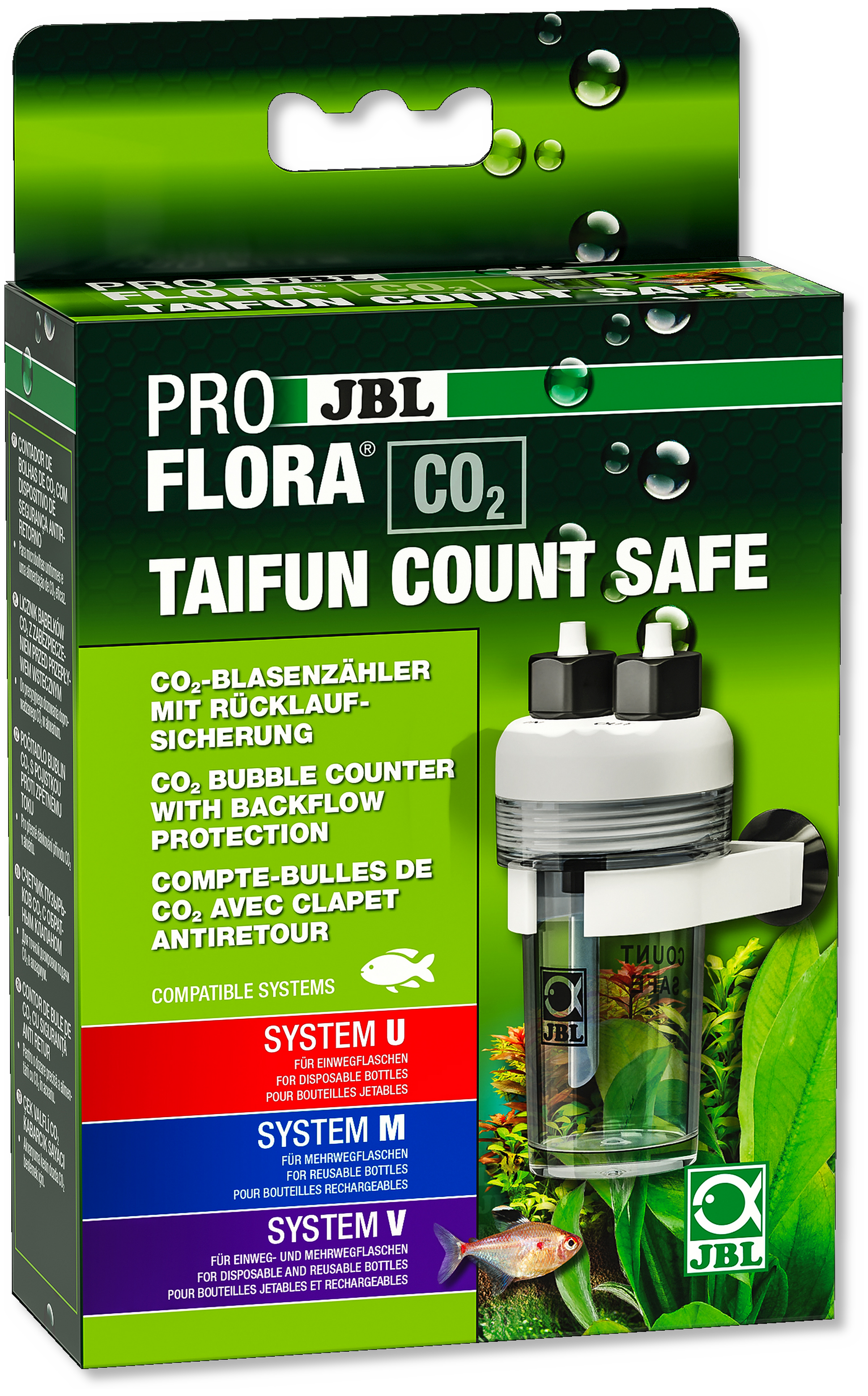
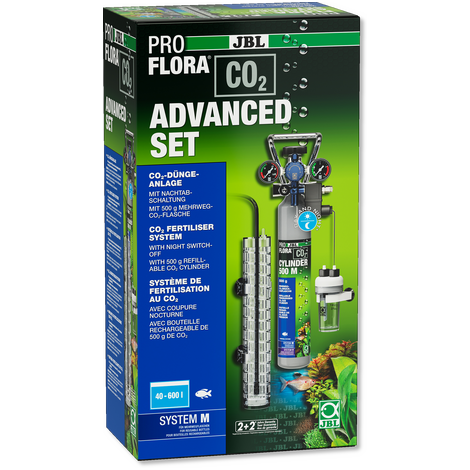
Screw the regulator onto the refillable or disposable CO2 cylinder. Connect the regulator with tubing to the bubble counter/check valve, then to the diffuser/reactor in the aquarium. Adjust the number of CO2 bubbles using the needle. The continuous CO2 test indicates whether the amount of CO2 being added is correct.
Safe operation:
The regulator is equipped with an overpressure relief valve. This allows for the safe release of an unintentionally over-set working pressure without damaging the regulator. The regulator's diaphragm actuation ensures absolute reliability.
Tip: Unscrew the knurled fitting nut using an Allen key to easily switch to a disposable bottle system.
How a regulator works:
To reduce the pressure in the gas cylinder, a pressure regulator is screwed onto it. This reduces the cylinder pressure from 50-60 bar to a working pressure of approximately 1.5 bar. This 1.5 bar can be regulated using a small handwheel (fine needle valve) with such precision that individual bubbles can be seen and counted in the connected bubble counter. In some regulators, the cylinder pressure and working pressure are displayed on gauges. In fact, these displays are not strictly necessary, because the pressure in the cylinder does not decrease slowly as in pressurized scuba diving cylinders, and you would therefore be warned when the cylinder is running low. Unfortunately, there is no gradual decrease in pressure within the cylinder. The working pressure would only be important if it needed adjusting, which is not necessary under normal circumstances.
Notice
There are no reviews yet.