
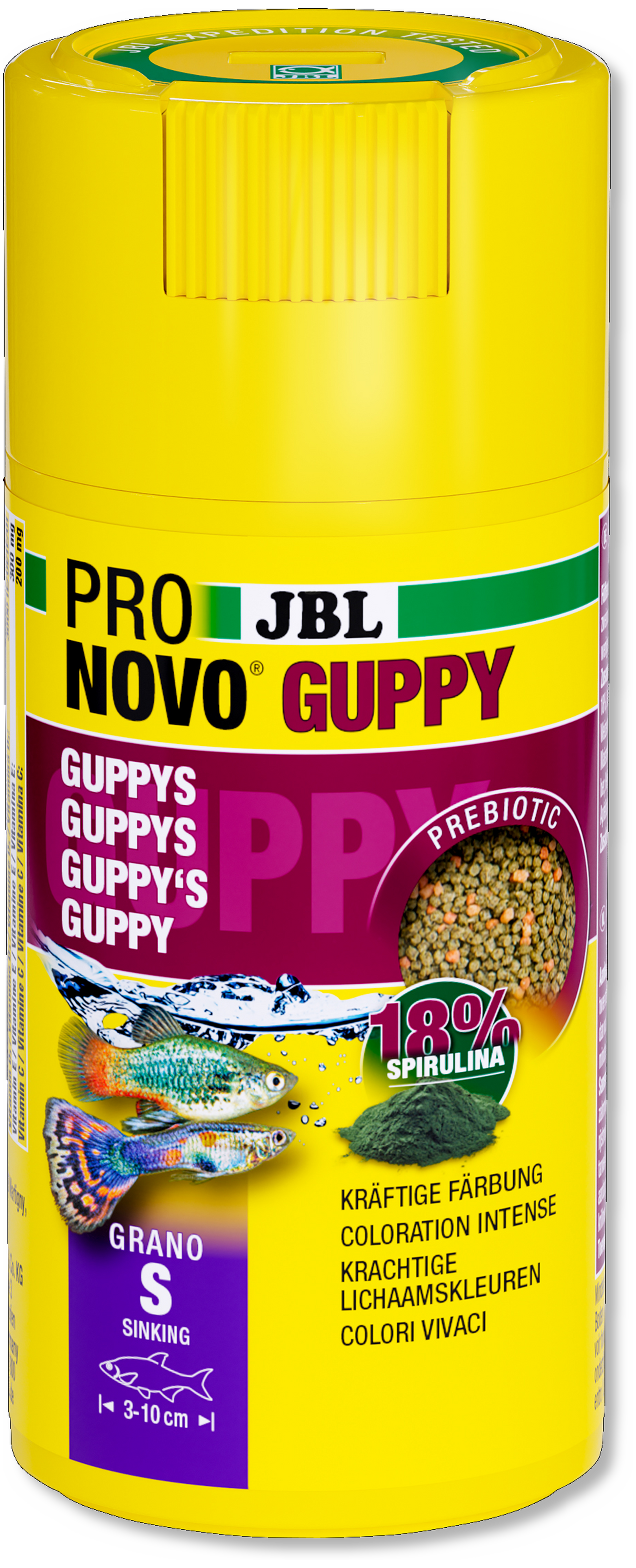
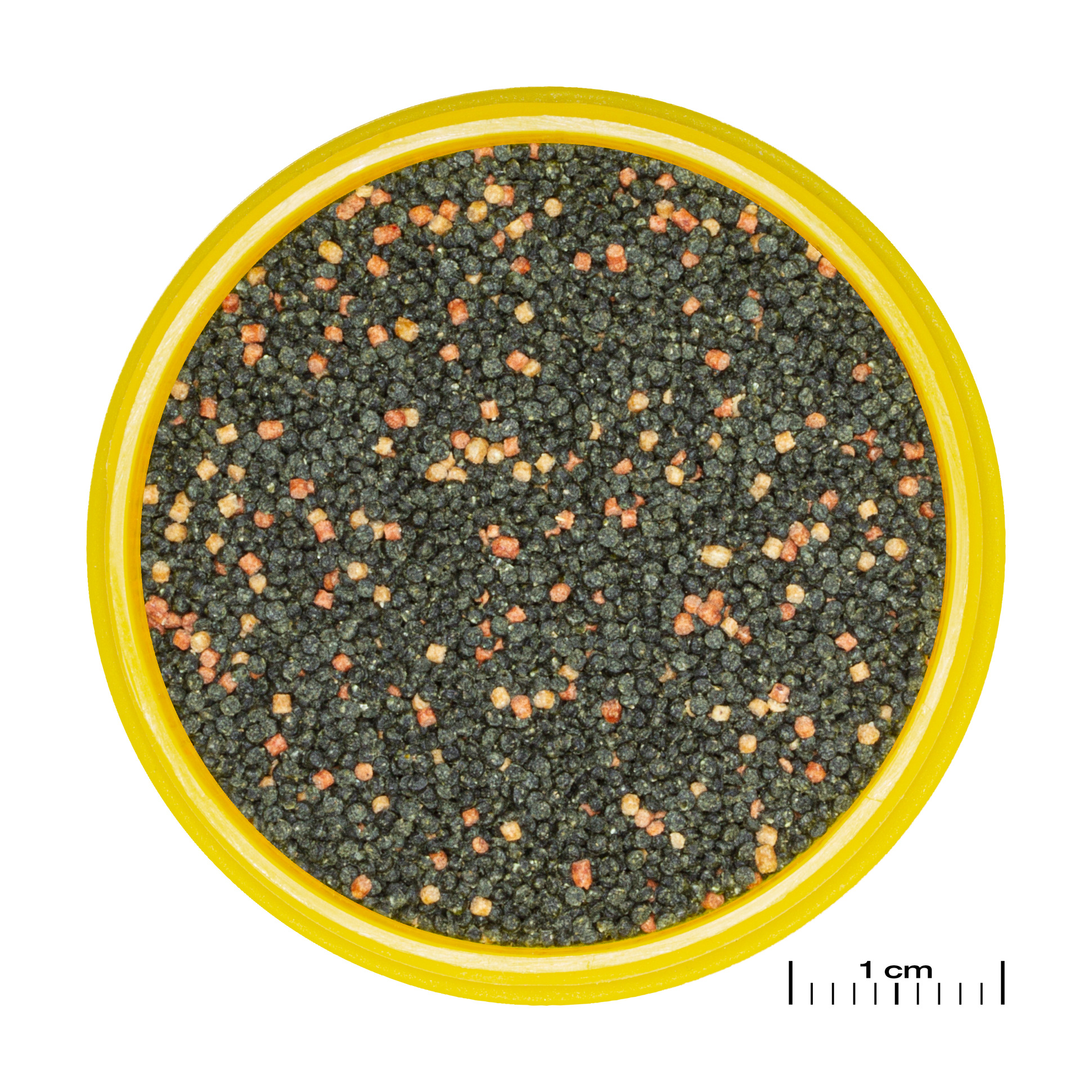

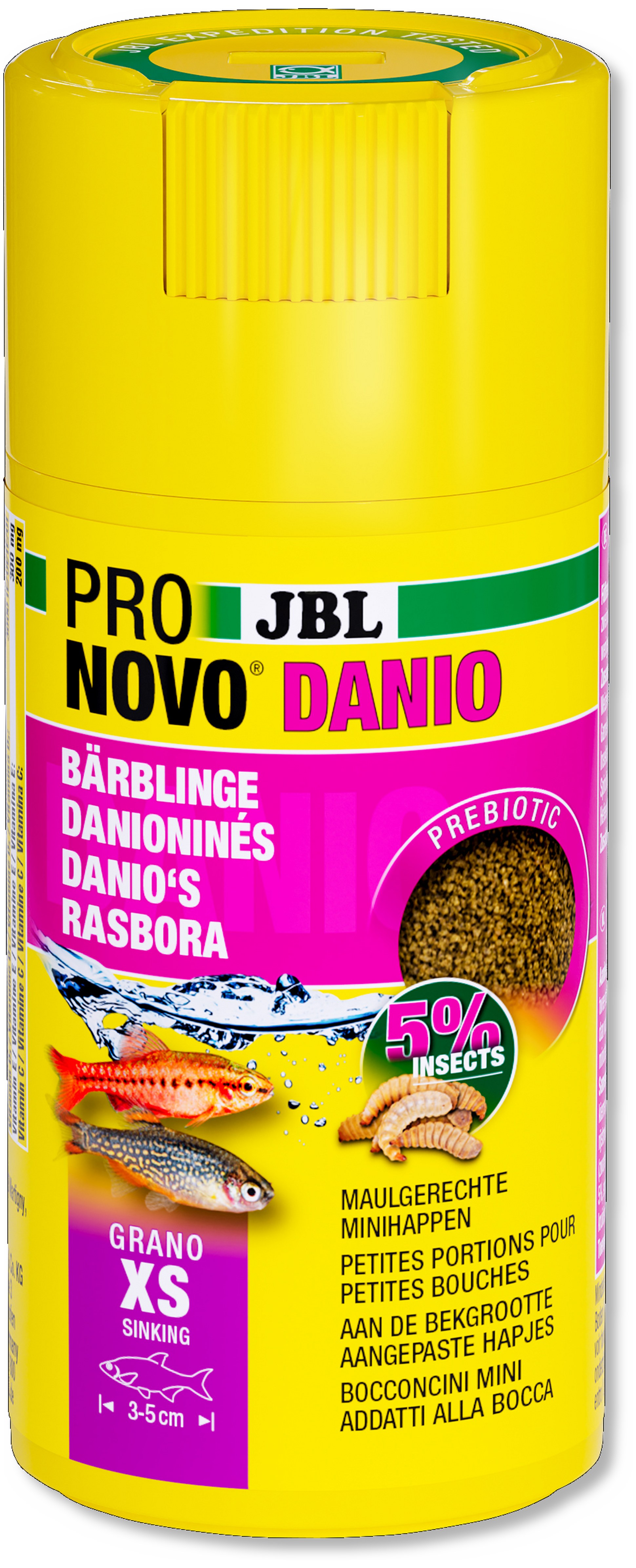


- Sinking prebiotic food for aquarium fish: the special dietary fibers contained in the food nourish the positive intestinal bacteria for healthy digestion.
- Raw, natural ingredients, without synthetic additives, for a diet close to the natural diet and good health for aquarium fish. Tested during JBL research expeditions in tropical regions.
- Very high palatability, even in difficult species of ovoviviparous Poeciliidae, thanks to high-end ingredients such as salmon, shrimp and spirulina.
- Contains very high quality natural astaxanthin, extracted from krill and spirulina, which guarantees perfect coloration of guppies and other ovoviviparous fish.
- Contents: Original sealed box, airtight and lightproof, recyclable, with dispenser in the lid
The ovoviviparous Poeciliidae (guppies, mollies, platies, mosquitofish, swordtails, and a few others) belong to the Poeciliidae group. All give birth to live young and therefore do not lay eggs, unlike most other fish species. In the wild, they eat insects, larvae, algae, and anything else edible – they are not picky eaters. Depending on their habitat, algae and their microscopic organisms often make up the largest part of their diet.
Flakes or pellets?
Honestly, it's a matter of personal preference! There's very little argument for or against. Those using an automatic feeder, like the JBL AutoFood, MUST choose pellets, as almost all feeders are designed for pellets only. If you're planning to buy an automatic feeder for your vacation, get your fish used to the pellets coming out of the feeder beforehand. Some fish have trouble switching from pellets to flakes or vice versa. Imagine: you've always eaten soft cornflakes and suddenly you're given multi-grain muesli.
Probiotic or prebiotic?
Probiotic foods, such as certain types of yogurt, contain live bacterial cultures that are beneficial to health, but only if consumed in large quantities. These foods, including probiotic fish food, can easily spoil and produce the opposite effect. Furthermore, their positive health effects are quite controversial. Prebiotics, or probiotics, are "substrates selectively used by host microorganisms that produce a health benefit." Scientists agree that they promote digestion and therefore health. Thanks to improved digestion, there is less waste, resulting in less water pollution and reduced algae problems. The water stays cleaner.

Notice
There are no reviews yet.